
Katahdin Ethos represents the history, character, and fundamental values passed down through generations by the brave
men and women who risked everything to build the Katahdin Region in the North Maine Woods.
Millinocket - The Magic City in Maine's Wilderness
How did Millinocket get its iconic nickname? To most people, it seemed to have appeared overnight. But there's a lot more to the story.
In 1829, Thomas Fowler and his family became the area's first settlers, clearing land for a small farm along the river. For decades, the region remained largely quiet wilderness—until 1894, when the Bangor and Aroostook Railroad extended its line through the area and unlocked its potential.
Soon after, Charles W. Mullen, an engineering graduate from the University of Maine, realized the incredible hydroelectric power of the West Branch of the Penobscot River. Partnering with paper industry expert Garret Schenck, they secured financial backing and broke ground on May 15, 1899, at the confluence of the West Branch and Millinocket Stream.
In just two years of relentless construction, an industrial powerhouse and the town beside it sprang to life. Great Northern Paper rapidly expanded into the largest paper mill in the world, setting international standards for paper-making and fueling Maine’s powerful economy.
Because a thriving town materialized practically overnight in the middle of the North Maine Woods, it earned a legendary title: "The Magic City." On March 16, 1901, the town officially incorporated under the name Millinocket—an Indian Abenaki word meaning "land of many islands."
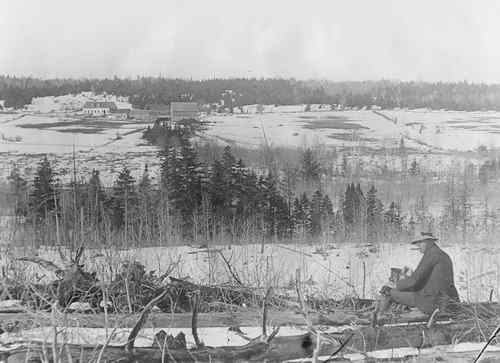
Millinocket, Maine
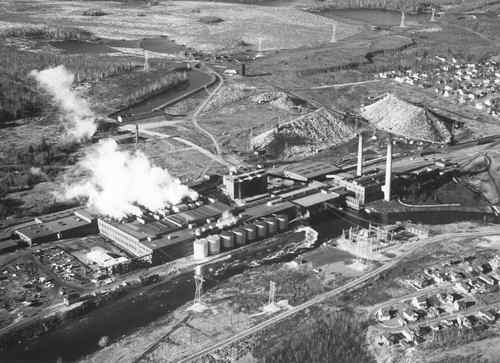
Millinocket, Maine
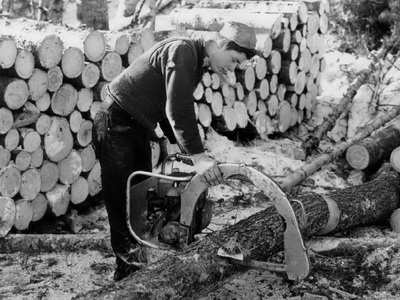
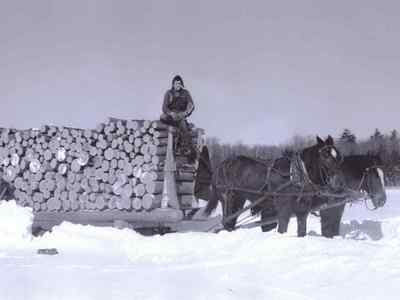
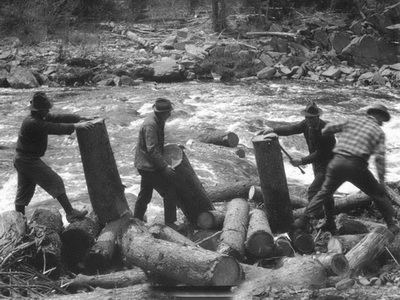
off the River Bank
in the 1920's
The Katahdin Region Has Something for Every Outdoorsman
Whether you’re a lifelong local, a visitor who falls in love with Northern Maine every summer, or an Appalachian Trail hiker who completed the journey of a lifetime—if you've spent time here, you know how special this place is. People who visit always remark on how warm and welcoming our community is, even if you’re from out of state (or as we like to say, "outah statah").
For generations, our woods, lakes, and rivers have drawn people looking to disconnect, explore, and create lifelong memories. Over the years, many athletes, musicians, and celebrities have escaped to our neck of the woods to hunt, fish, and unwind in total peace.
One of the most famous regulars was Boston Red Sox legend Ted Williams. The Katahdin area was one of "The Splendid Splinter’s" favorite hideaways to escape the spotlight and dodge the sports media—whom he famously dubbed the "Knights of the Typewriter" (or as we might call them today, "Keyboard Warriors").
Locals would occasionally spot him around Millinocket heading out to fly fish. Just as he mastered hitting a baseball, Ted brought that same scientific intensity to casting a line, quickly becoming one of the finest fly fishermen in the country. While most know him solely as a Baseball Hall of Famer, in 2000 he was also inducted into the International Game Fish Association Hall of Fame. We like to think the pristine waters of Northern Maine helped him sharpen those skills along the way.
Maine's Biggest Small Town is Waiting for You
Katahdin Ethos was created for you—whether you’re a lifelong resident, a local business owner, a hiker, hunter, angler, snowmobiler, photographer, history buff, or simply someone eager to learn about our incredible Maine community.
Explore our growing historical photo gallery to see how generations of hardworking men and women built, shaped, and sustained this region through the 19th, 20th, and 21st centuries.
While you're in town, be sure to support our local small businesses! Stop by, say hello, and shop local—our business owners are the true backbone of our economy and community spirit.
Still need one more reason to visit? In 2015, National Geographic named its top 10 summit hikes in the world, and Mt. Katahdin ranked #2.
So, what are you waiting for? We can't wait to see you soon!
WHAT IS KATAHDIN ETHOS?
Katahdin Ethos represents the history, character, and fundamental values passed down through generations by the brave men and women who risked everything to build the Katahdin Region in the North Maine Woods.
CONNECT WITH US
WEBSITE MENU
View Our Huge Photo Gallery
Great Northern Paper Timeline
Contact Katahdin Ethos
Shop in Our Online Store (coming soon)
© 2026 Katahdin Ethos. All Rights Reserved.